Why Meaningful Connections Matter More Than Ever
Recently the entire world watched as four astronauts, three from the United States and one from Canada, traveled farther than any humans had ever gone into space. Reid Wiseman, Victor Glover, Christina Koch and Jeremy Hansen journeyed to the far side of the moon and beheld a view that none had ever seen before, a lunar eclipse of the earth from space.
When they returned each spoke of the deeply emotional and spiritual experience of what they had seen and felt. From their perspective the crew described our planet as a “lifeboat” amid the blackness that surrounded it, calling it a “fragile sphere” that was glowing blue and brown marble.
Observing from over 200,000 miles away, Jeremy Hansen described earth as “infinitesimally small.” Victor Glover remarked, “it is one thing,” and as humans, “we are all one people.” Clearly, each of them was deeply moved by the magnitude of their experience. Their perception of life, humanity, and the universe was forever changed.
Very few of us will ever get the chance to view Earth from their vantage point, but if we did, we might consider how small and youthful humanity appears within the vastness of a universe scientists estimate to be approximately 13.8 billion years old, while Earth is about 4.54 billion years old.
Today, in the United States, life expectancy is approximately 76.5 years for men and 81.4 years for women, according to the Centers for Disease Control and Prevention. Scientists also estimate that the number of stars in the observable universe exceed the number of grains of sand on Earth, a humbling reminder of the vastness of creation and the brevity of human life. In the span of time, we are barely discernible compared to these figures, astounding as they are.
Whenever we are tempted to exaggerate our worth and superiority, we are challenged to examine reality. Our significance consists of an honest and humble evaluation of our role in creation as well as our responsibility to ourselves, others and the world in which we live.
Those who see themselves as entirely self-made, independent, and self-sufficient risk isolating themselves from the people around them. This kind of detachment, often rooted in pride and self-interest, can foster a society marked by exclusivity, prejudice, and oppression. Yet there is a way to avoid the emptiness of a self-centered life, and it is something we can explore together.
All of us share the same origin, as we have often heard, “we are dust and unto dust we shall return.” Our common beginning is inarguable, so too is our destiny. If we all share the same source and the same fate then who among us is better, more valuable or more worthy of respect than the other?
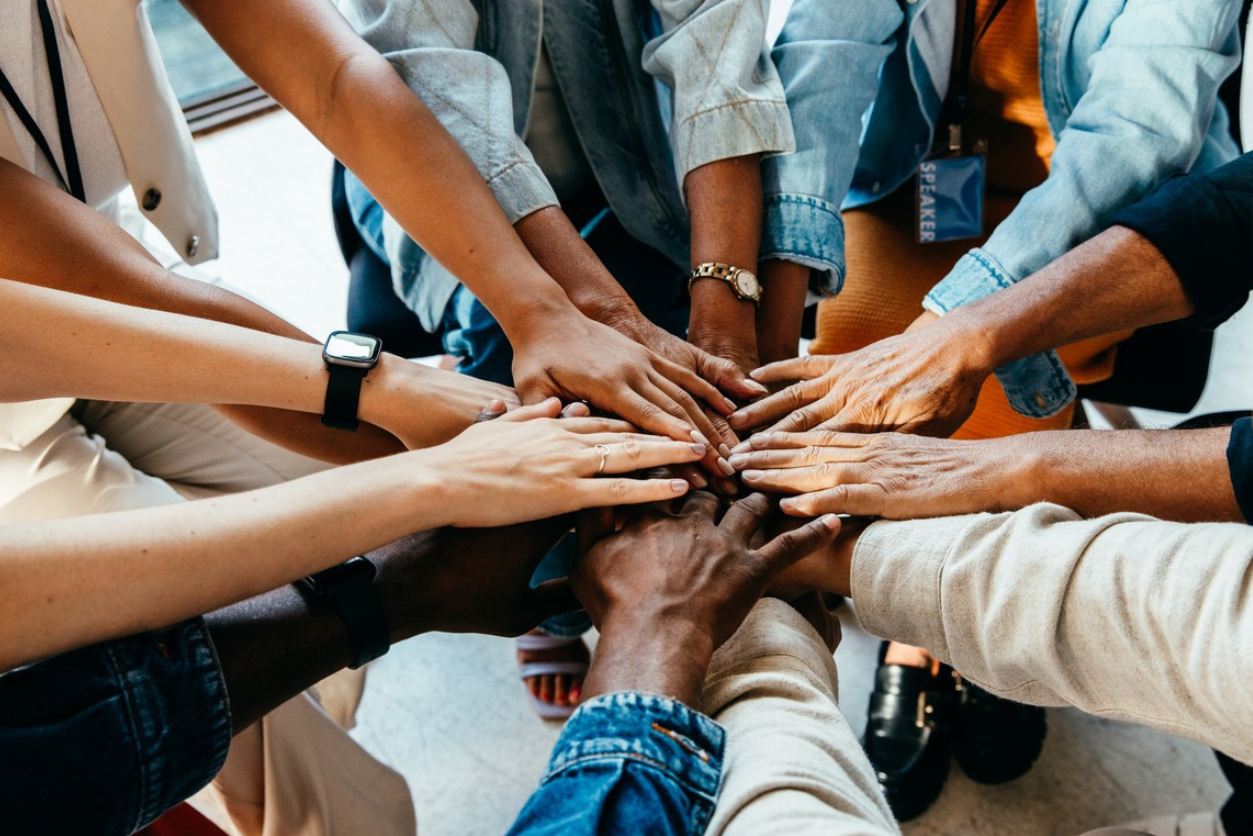
As British parliamentarian Jo Cox so eloquently said, “We are far more united and have far more in common than that which divides us.” Her words carry a timeless truth. We share much more in terms of our values, needs, desires, and experiences than we do in our differences. When we take the time to reflect on this, we begin to acknowledge this very important reality: we are all connected to each other.
Research shows that chronic loneliness and social isolation are linked to a 25–30% higher risk of premature death, underscoring how essential meaningful human connection is to our physical and emotional well-being. Without companionship there are many who do not have the assistance for their daily needs, who lack the access to reasonable health care or the compassionate interaction of a friend. Life is all about relationships, whether they be spiritual, social, professional, physical, mental and emotional.
Our spiritual lives develop more fully within a community where people gather to worship, to share their faith and foster a deeper relationship with their God and each other. Socially, we are part of a city, town, state and nation that provides us with an identity as a citizen and member of a larger body.
In his bestselling book, Bowling Alone, Robert Putnam emphasizes, “Social connectedness is not merely about warm fuzzy feelings or frissons of community pride. In measurable and well-documented ways, social connectedness is associated with better schools, faster economic development, lower crime, and more effective government.”
There are many bonds that connect us and while they are not always identical, they create unity by shaping both our minds and consciences. We are mentally drawn to people who share our beliefs, ideas, values, and dreams. These pro-social connections inspire acts of service that help those in need such as feeding the hungry, providing transportation, or supporting people facing life’s struggles. Charity becomes a bridge between the “haves” and the “have nots.” Ultimately, the emotional connections we form sustain us throughout life, often creating lifelong friendships through shared moments of joy, hardship, or tragedy.
The Inca View of Life: Everything is Connected
Some years ago, I had the extraordinary opportunity to visit Machu Picchu. Standing in the city’s sacred plaza, I imagined the grandeur of the night sky as the ancient Inca people once saw it. Through the brilliance of the stars, planets, and the Milky Way, they understood their place in the universe. Their astrological structures and carefully aligned buildings reflect both their knowledge of the cosmos and their deep reverence for it. The precision with which many of these works correspond to solstices and equinoxes offers further evidence of the connection they sought within the mysteries beyond their world.
The Inca believed that spirits inhabited many forms of life, especially the mountains of the Andes, which they called “apus.” Their recognition of the divine throughout creation may lead some to view their beliefs as pantheistic. Yet for the Inca, this understanding was more than religion, it was an awareness of their origin, their destiny, and their connection to the world around them. They saw themselves as deeply intertwined with every aspect of creation and honored that truth in every part of their lives.
Imagine if we adopted this attitude towards the connections we have in our lives. We might treat each other more respectfully, support one another more capably and demonstrate more care and concern for the planet we share.
When the Artemis II astronauts looked back at Earth and described it as a “lifeboat,” they revealed a profound truth: we are all in the same boat, connected not only by a shared planet, but by our common needs, our shared humanity, and the journey we all take through life. Our origin, our destiny and our dependence on one another create a human bond that keeps us unshakably connected.
5 Steps Toward Meaningful Social Connections
Step 1 – Start with Prayer
Lord,
Guide me toward the community and connections
that align with the person You are calling me to become.
Help me build relationships that bring wisdom,
encouragement, peace, and growth into my life.
Lead me toward people who strengthen my spirit,
challenge me to become better, and remind me
that I am not meant to walk through life alone.
Amen.
Step 2 - Be Authentic
People connect most deeply with honesty, vulnerability, and sincerity.
Step 3 - Show Genuine Interest
People feel valued when they feel heard and understood.
Step 4 - Be Among People with Like Values
Healthy connections grow naturally in places aligned with your interests, faith, purpose, service, creativity, or personal growth.
Step 5 - Be Consistent
Strong relationships are built through repeated small moments. Check in, show up, and follow through.