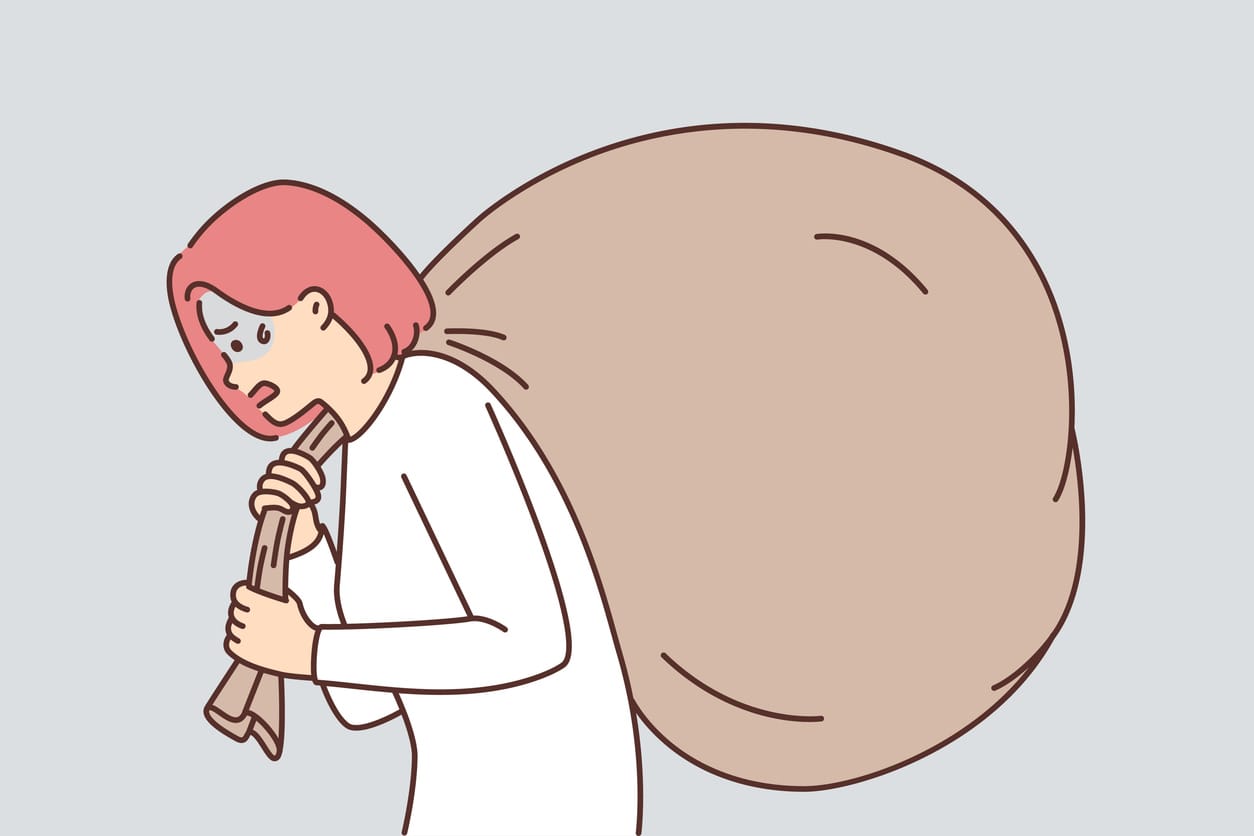
Most things in life are not permanent, and neither are we. That’s why you’ll never see a hearse pulling a U-Haul. This impermanence speaks to the way life’s unexpected turns can shake the emotional comforts we cling to.
As I’ve shared before, we all long for safety, closeness, happiness, and freedom from worry and we instinctively resist anything that threatens them. We wish our most cherished moments would last forever, but they inevitably pass. Wanting permanence and clinging to joy, relationships, and success is a natural human response.
But beware, when we emotionally attach ourselves to the “highs” in our lives, the “lows” can be deeply depressing and discouraging. The severity of the vacillation between them can leave you in a state grief resembling death, and in many ways it is.
Think of a time when you felt fully alive, excited, fulfilled, and certain that everything was just right. Then recall how that moment eventually ended, leaving only a memory. Experiences like these help us accept a fundamental truth: nothing lasts forever, and impermanence is all around us.
Notice how easily we cling to what we own. For some, possessions take on greater importance than relationships. When this happens, our focus shifts away from the people in our lives and toward the things that demand our time and attention, creating distance where connection once existed.
Many of us fall prey to our addiction to “things.” I recall a friend of mine who had purchased an extremely valuable painting, and as he showed it to me, I asked, “How do you feel now that you own it?” He replied, “Look at this,” as he showed me the back of the art piece, which listed the names of its previous keepers. “You see, I don’t own it. I’m merely a custodian.” He shifted his concept of ownership into a healthy, temporary attachment.
In the Bhagavad Gita it is written, “detachment is not that you own nothing, but that nothing owns you.” Ask yourself, what have you allowed to own you? What occupies your two most precious assets, time and attention? I was once told that if you show someone your check book or credit card statements, it will show what your real priorities, needs and concerns are.
Nothing can ever own us unless we allow it to do so. The subtle submission to the seductive powers of material goods and their acquisition leads us to believe that our image and likeness will be enhanced by them and make us happier. Nothing could be further from the truth.
Preoccupation with Our Occupation
Likewise, we can misplace the value of another preoccupation in our personal lives—our jobs. The greatest temptation we face is our own self-importance in the work we do, or overestimating the importance of our contributions and allowing our professions to demand more time than necessary.
The signs of our preoccupation with our work are most evident in our inability to detach ourselves from work, limiting our social, spiritual, physical, mental and emotional connections. It’s vital for us to develop our whole personality but without a balanced approach to growth, we run the risk of losing stability within ourselves and our relationships with others. Being too focused on one facet of our lives will render us incomplete and stifled.
Old Wounds Find Their Way Back
Here’s the real plot twist: while we can become too attached to our past, our possessions, or our careers, we can also get just as entangled in our relationships. Right in the middle of loving and being loved, old childhood wounds resurface that begin to soil the relationship.
No parent gets a perfect score, and none of us escapes the marks left by imperfect parenting. That’s why people say the struggles of one generation have a way of showing up in the next. A little self-honesty might serve parents well, especially the courage to look at their own unexamined wounds that are still waiting to be named, and perhaps, healed.
Dr. Gabor Mate, a leading voice on trauma and addiction, has written, “When trauma gets triggered you don’t act your age, you act the age the wound was created.” For many who experienced troubled childhoods, where nurturing, affection, attention, or security were missing, their unmet needs often resurface later in life. As we grow older, we may look to relationships to supply what was absent, hoping to recover or repair what we once lacked.
These pursuits can develop into unhealthy forms of attachment and can become sources of further pain and destruction. Attempts to heal a wound or numb the discomfort often leads to a deeper injury, depression, relationship failure, low self-esteem and obsessive-compulsive behavior.
Until we gain the courage to reflect upon our wounds, we will never fully understand why our attachments exist. Regardless of our attachment to our possessions, careers or relationships, inner peace cannot be found if the cause of our suffering goes unrecognized and unattended.
Buddhists teach us that all attachments will always lead to suffering, primarily because of their impermanence. What we cling to, what we obsess over, or who we seek to possess will never heal us from wounds we did not create but only experienced.
As adults, we can look to align ourselves with the past, not with condemnation but to reclaim the power we need to heal ourselves. Yes, we do have that gift, and it may take more time and effort than we expect, but rather than being a victim for what we endure we can be the architect of our own healing. We did not choose the pain, but we have the choice of whether or not to suffer from it. In the end, true ownership of ourselves is worth far more than anything we try to possess.
5 Steps to Releasing Our Attachments
Step 1: Start with a Prayer
Loving God,
Grant us the grace to recognize the attachments
that claim our hearts and shape our choices.
Help us to release what no longer serves us,
even when it once brought comfort or security.
Teach us to seek our worth not in what we possess,
achieve, or cling to, but in who we are.
May letting go become an act of trust,
and may trust lead us into greater
peace, balance, and wholeness.
Amen.
Step 2: Name What You’re Clinging To
Attachment loses its grip when it is acknowledged. Notice what you fear losing and name it honestly.
Step 3: Ask What It Gives You
Every attachment serves a purpose. Ask yourself what comfort, security, identity, or control it provides.
Step 4: Accept Its Impermanence
Nothing stays the same. Accepting impermanence frees us from expecting what cannot be guaranteed.
Step 5: Choose Wholeness Over Holding On
Releasing attachment isn’t loss; it’s a decision to live more fully, present, and grounded in who you are rather than what you possess.